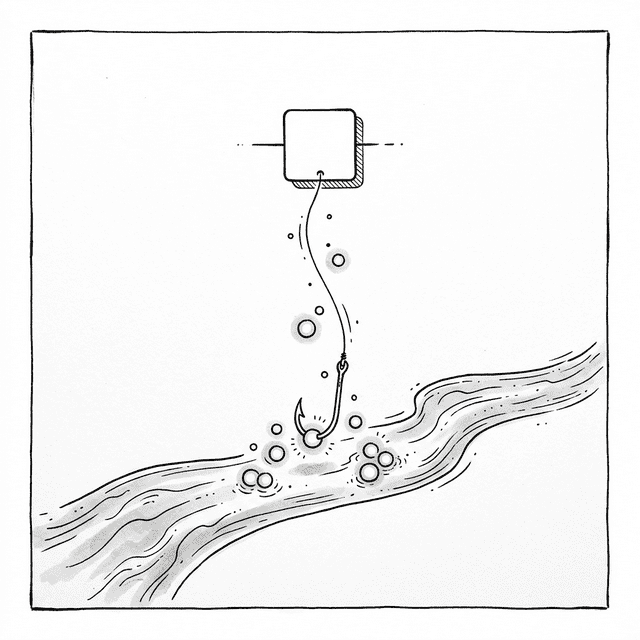
Chapter 12: Hooks — The Memory of Functions
12.1 Leaving the Old Baggage Behind
Po looked at the powerful Fiber engine just completed.
Shifu, we now have a Render phase that can pause and resume anytime, and an ultra-fast synchronous Commit phase. But the class Component we wrote earlier seems to have trouble in the new architecture?
Yes. Remember the trouble we ran into in chapter eight (Patterns of Reuse)? To reuse logic between class components, we used HOC and Render Props, which led to "Wrapper Hell."
Of course I remember! That wrapper hell caused impossibly deep component trees, triggering the "browser freeze" crisis in chapter nine, which is why we spent three chapters building the brand new Fiber engine.
Exactly. And in the Fiber architecture, since Render phase runs under time slicing, a component instance's render() method might be called multiple times then discarded (if the scheduler deems a higher-priority task has arrived). This means lifecycle methods in class (like constructor or early lifecycle side effects) would cause unexpected bugs, making class components extremely unreliable and increasingly bloated.
Since that's the case, why not completely drop class?
That was exactly the React team's idea. At React Conf 2018, Sophie Alpert and Dan Abramov formally proposed the Hooks proposal. Their goal was clear: give function components the same capabilities as class components, while avoiding all the trouble class brings.
But how can function components have "state"? Functions start fresh every time they're called, right?
Good question. Let's first look at where the problem is.
12.2 Functions Have "Amnesia"
Here's a simple TodoItem function component:
function TodoItem(props) {
  return h('div', { className: 'item' }, props.text);
}
No this confusion, no large confusing lifecycle. Given the same input (Props), it always returns the same UI snapshot. It naturally embraces the declarative essence: UI = f(state).
But it has a fatal flaw — no memory. Look — if I want this component to remember how many times it's been clicked:
function Counter() {
  let count = 0; // local variable

  return h('button', {
    onclick: () => {
      count++;
      console.log('Latest count:', count);
      update(); // trigger re-render
    }
  }, `Clicks: ${count}`);
}
Every time I click, count does increment in the closure, but calling update() causes Counter() to be re-executed. When it re-executes, let count = 0 is re-initialized. The page always shows 0.
Think of function components as a goldfish 🐟 — every call is a brand new fish with no memory of the previous second. To make it "remember," we must store the memory outside the fish.
Outside the fish? You mean... store state outside the function?
12.3 First Attempt: Global Variable
Right. The most intuitive approach: put state in a global variable.
let globalState;

function useState(initialValue) {
  if (globalState === undefined) {
    globalState = initialValue;
  }

  function setState(newValue) {
    globalState = newValue;
    update(); // trigger re-render
  }

  return [globalState, setState];
}
We call this special function that "helps pure functions retrieve state from outside" a Hook.
Hook?
Like a fishing hook 🪝 — your pure function is just a carefree fish, but a Hook lets it hook into the engine's internal mechanisms to gain the superpower of reading and writing state.
Usage:
function Counter() {
  const [count, setCount] = useState(0);
  return h('h1', { onclick: () => setCount(count + 1) }, count);
}Elegant! But what if there are two Counter components on the page?
Disaster — two Counter components share the same globalState, overwriting each other.
What if we upgrade the global variable to a global array? Each useState takes its slot from the array in order:
let hooksArray = [];
let hookIndex = 0;

function useState(initialValue) {
  const currentIndex = hookIndex;

  if (hooksArray[currentIndex] === undefined) {
    hooksArray[currentIndex] = initialValue;
  }

  function setState(newValue) {
    hooksArray[currentIndex] = newValue;
    update();
  }

  hookIndex++;
  return [hooksArray[currentIndex], setState];
}Yes. The array approach lets one component call useState multiple times. But think about the bigger picture —
100 components, each with 3 useState calls... 300 states crammed into one giant array. How does React know which section belongs to which component? If a component unmounts, does the array still align?
You immediately spotted the fragility of the global array approach. Now let's go back to the real architecture we spent three chapters building.
12.4 Give Memory to Fiber — Each Component Has Its Own "Drawer Cabinet"
Analogy: One Cabinet Per Person
In the Fiber architecture, each component corresponds to a Fiber node. Think of each Fiber node as a small cabinet with drawers 🗄️:
Fiber: <Counter title="Counter A">
┌──────────────────────────┐
│  Drawer 0:  count = 0    │  ← 1st useState call
│  Drawer 1:  step  = 1    │  ← 2nd useState call
└──────────────────────────┘

Fiber: <Counter title="Counter B">
┌──────────────────────────┐
│  Drawer 0:  count = 0    │  ← 1st useState call
│  Drawer 1:  step  = 1    │  ← 2nd useState call
└──────────────────────────┘
Each component has its own drawer cabinet (fiber.hooks array), completely independent. useState calls open drawers 0, 1, 2 in order...
This way no matter how many Counter components there are, states won't interfere! But how is it implemented?
Technical Mapping: wipFiber and hookIndex
We only need two "global pointers":
| Variable | Meaning | Analogy |
|---|---|---|
wipFiber |
The Fiber node currently being rendered | "Which cabinet is currently open" |
hookIndex |
Which useState call we're on |
"Which drawer are we pulling" |
Every time the engine starts rendering a function component, it does three things:
function updateFunctionComponent(fiber) {
  // ① Point the pointer to the current Fiber (open this cabinet)
  wipFiber = fiber;
  // ② Reset drawer counter (start from drawer 0)
  hookIndex = 0;
  // ③ Prepare a new hooks array
  wipFiber.hooks = [];

  // Execute the function component, get children
  const children = [fiber.type(fiber.props)];
  reconcileChildren(fiber, children);
}So when useState(0) is called inside Counter()'s function body, useState just needs to get state from wipFiber.hooks[hookIndex]!
Right. And because Fiber has an alternate pointer (pointing to the last render's Fiber), we can easily take the previously stored value from the "old cabinet."
Minimal useState: Read Only
function useState(initial) {
  // Try to get old value from same drawer in old Fiber
  const oldHook =
    wipFiber.alternate &&
    wipFiber.alternate.hooks &&
    wipFiber.alternate.hooks[hookIndex];

  const hook = {
    state: oldHook ? oldHook.state : initial,
  };

  wipFiber.hooks.push(hook); // put in new cabinet
  hookIndex++;               // ready for next useState
  return [hook.state, null]; // setState added later
}
Tracing: Counter's First Render
First render of Counter A:
  wipFiber = Counter_A's Fiber node
  hookIndex = 0
  wipFiber.alternate = null (first render, no old Fiber)

  ① useState(0)
     → oldHook = null (no old Fiber)
     → hook.state = 0 (use initial value)
     → wipFiber.hooks = [{ state: 0 }]
     → hookIndex becomes 1
     → returns [0, ...]

  ② useState(1)
     → oldHook = null
     → hook.state = 1 (use initial value)
     → wipFiber.hooks = [{ state: 0 }, { state: 1 }]
     → hookIndex becomes 2
→ returns [1, ...]Correct. And what happens after the user clicks the button?
Tracing: Counter's Second Render
User clicks → triggers re-render → Counter A called again
  wipFiber = Counter_A's new Fiber node
  wipFiber.alternate = previous Fiber (has hooks: [{ state: 3 }, { state: 1 }])
  hookIndex = 0

  ① useState(0)
     → oldHook = alternate.hooks[0] = { state: 3 }
     → hook.state = 3 (take from old drawer, ignore initial value!)
     → returns [3, ...]

  ② useState(1)
     → oldHook = alternate.hooks[1] = { state: 1 }
     → hook.state = 1 (take from old drawer)
→ returns [1, ...]I understand! The initial parameter only takes effect on the first render. Every subsequent render takes the value from the corresponding old Fiber position. That's the function's "memory"!
The "Full Re-execution" Model
Before continuing, let's formally name a core mechanism that will run through the next few chapters — the "Full Re-execution" model.
Every time state changes, React doesn't "patch" the last execution result. Instead it re-executes the entire component function from top to bottom, generating a fresh UI snapshot, then uses Reconciliation to find differences and update the DOM. Fiber is responsible for pulling hook.state from the "old drawer" so this fresh execution can "remember" the previous state — but beyond that, every variable and expression in the function is computed from scratch.
Like every render, that goldfish is a brand new fish, just inheriting the DNA of the previous goldfish from outside the tank?
That analogy is quite accurate. This model gives us a simple, pure mental framework — UI = f(state) — while also bringing two challenges you're about to encounter:
First, if the function has "things that should only be done once" (like starting a timer or sending a network request), re-executing every time would do them repeatedly, causing disaster. Second, if the function has "expensive computations" (like filtering ten thousand rows of data), every trivial re-render would recompute everything, wasting performance. All of chapter thirteen is about how to properly handle these two challenges within the "full re-execution" model.
12.5 Making setState Trigger Updates
Now let's add the most crucial part — how does setState make the engine re-render?
setState needs to do two things: ① record the new value; ② tell the engine to "start work."
Right. But one detail: setState might be called multiple times in one frame (like clicking twice quickly), so instead of directly overwriting state, we use a queue to store update requests. At the next render, we "settle" all updates in the queue at once.
function useState(initial) {
  const oldHook =
    wipFiber.alternate &&
    wipFiber.alternate.hooks &&
    wipFiber.alternate.hooks[hookIndex];

  const hook = {
    state: oldHook ? oldHook.state : initial,
    queue: oldHook ? oldHook.queue : [],
    setState: oldHook ? oldHook.setState : null,
  };

  // Settle queue: apply all pending updates in order
  hook.queue.forEach(action => {
    hook.state = typeof action === 'function'
      ? action(hook.state) // support functional update: setCount(c => c + 1)
      : action;            // also support direct assignment: setCount(5)
  });
  hook.queue.length = 0; // clear settled queue

  // Create setState on first render
  if (!hook.setState) {
    hook.setState = action => {
      hook.queue.push(action);   // ① queue the update request
      // ② tell the engine to "start work" — create new wipRoot
      wipRoot = {
        dom: currentRoot.dom,
        props: currentRoot.props,
        alternate: currentRoot,
      };
      workInProgress = wipRoot;
      deletions = [];
    };
  }

  wipFiber.hooks.push(hook);
  hookIndex++;
  return [hook.state, hook.setState];
}Let me verify the full flow:
- User clicks button → calls
setCount(c => c + 1)setCountpushesc => c + 1intohook.queuesetCountcreates newwipRoot, engine starts new Render phase- Engine traverses to Counter's Fiber → calls
updateFunctionComponentCounter()executes → callsuseState(0)insideuseStategetsoldHookfrom old Fiber, findsc => c + 1inqueue- Executes
action(oldHook.state)→ gets newstate- Returns
[new state, setState], Counter renders new UI
Exactly. That's the complete lifecycle of Hooks.
12.6 The Iron Rule of Hooks: Can't Go Inside if
Wait, I just thought of something. useState relies on hookIndex (drawer number) to match state. What if I write this:
function BadCounter() {
  const [count, setCount] = useState(0);

  if (count > 5) {
    const [warning, setWarning] = useState('Too many!');
  }

  const [step, setStep] = useState(1);
  return /* ... */;
}Disaster. Let's trace two cases:
When count = 3 (if doesn't run):
  Drawer 0 → count    ✓
  Drawer 1 → step     ✓

When count = 6 (if runs):
  Drawer 0 → count    ✓
  Drawer 1 → warning  ← should be step!
Drawer 2 → step ← extra drawer, misalignedAll drawers got mixed up! Because hookIndex increments in call order — once one render has one more or fewer useState calls than the previous, all subsequent drawer numbers are off.
This is why React has an iron rule:
Hooks must be called at the top level of the function, never inside conditionals, loops, or nested functions.
Because only by ensuring call order and count are identical in every render can the "sequential drawer" mechanism work correctly.
| ✅ Correct | ❌ Wrong |
|---|---|
Call useState at function body top |
Call useState inside if |
| Same number of calls every render | Call useState in a loop dynamically |
| Call order never changes | Call useState after an early return |
12.7 A Historic Moment: React Conf 2018
Let's pause the code and go back to the historical scene.
At React Conf in October 2018, Sophie Alpert first showed class components' three major pain points:
- Hard to reuse logic — HOC / Render Props bring wrapper hell
- Fragmented lifecycle — related logic split across different lifecycle methods
thisis confusing — event handlers needthisbinding, a dense trap for beginners
That's exactly the trouble we've been experiencing firsthand!
Yes. Then Dan Abramov took the stage and live-demo'd useState and useEffect. The audience gasped — function components can have state and side effects too!
That was the birth of Hooks. It didn't appear out of thin air as "new syntax sugar" — it was the inevitable product of a journey from reuse struggles (chapter eight) → browser freeze (chapter nine) → Fiber architecture (chapters ten and eleven).
Wait, what's useEffect that Dan showed? We only implemented useState.
That's the topic of the next chapter. With the "full re-execution" mental model in place, you'll quickly understand why useEffect must exist and how it protects your functions from being harmed by re-execution.
12.8 Try It Yourself
Open demoThe following is the complete mini-React engine with useState. Open in a browser to run: two independent Counter function components, each maintaining their own state.
<!DOCTYPE html>
<html>
<head>
  <meta charset="UTF-8">
  <title>Chapter 12 - Hooks: The Memory of Functions</title>
  <style>
    body { font-family: sans-serif; padding: 20px; text-align: center; }
    .counter { max-width: 400px; margin: 20px auto; border: 1px solid #999; }
    button { margin: 10px 20px; font-size: 16px; cursor: pointer; }
  </style>
</head>
<body>
  <div id="app"></div>
  <script>
    // === Virtual DOM factory ===
    function h(type, props, ...children) {
      return {
        type,
        props: {
          ...props,
          children: children.flat().map(child =>
            typeof child === "object" ? child : { type: "TEXT_ELEMENT", props: { nodeValue: child, children: [] } }
          ),
        },
      };
    }

    // === Fiber Engine (built in chapters 10 and 11) ===
    let workInProgress = null;
    let currentRoot = null;
    let wipRoot = null;
    let deletions = [];
    let wipFiber = null;
    let hookIndex = null;

    function render(element, container) {
      wipRoot = { dom: container, props: { children: [element] }, alternate: currentRoot };
      deletions = [];
      workInProgress = wipRoot;
    }

    function workLoop(deadline) {
      let shouldYield = false;
      while (workInProgress && !shouldYield) {
        workInProgress = performUnitOfWork(workInProgress);
        shouldYield = deadline.timeRemaining() < 1;
      }
      if (!workInProgress && wipRoot) commitRoot();
      requestIdleCallback(workLoop);
    }
    requestIdleCallback(workLoop);

    function performUnitOfWork(fiber) {
      const isFunctionComponent = fiber.type instanceof Function;
      if (isFunctionComponent) updateFunctionComponent(fiber);
      else updateHostComponent(fiber);

      if (fiber.child) return fiber.child;
      let nextFiber = fiber;
      while (nextFiber) {
        if (nextFiber.sibling) return nextFiber.sibling;
        nextFiber = nextFiber.return;
      }
      return null;
    }

    // === Chapter 12 new: function component rendering + Hooks ===
    function updateFunctionComponent(fiber) {
      wipFiber = fiber;
      hookIndex = 0;
      wipFiber.hooks = []; // prepare new hooks array ("open the cabinet")
      const children = [fiber.type(fiber.props)];
      reconcileChildren(fiber, children);
    }

    function updateHostComponent(fiber) {
      if (!fiber.dom) fiber.dom = createDom(fiber);
      reconcileChildren(fiber, fiber.props.children);
    }

    function createDom(fiber) {
      const dom = fiber.type === "TEXT_ELEMENT"
        ? document.createTextNode("")
        : document.createElement(fiber.type);
      updateDom(dom, {}, fiber.props);
      return dom;
    }

    function updateDom(dom, prevProps, nextProps) {
      for (const k in prevProps) {
        if (k !== 'children') {
          if (!(k in nextProps) || prevProps[k] !== nextProps[k]) {
            if (k.startsWith('on')) dom.removeEventListener(k.slice(2).toLowerCase(), prevProps[k]);
            else if (!(k in nextProps)) {
              if (k === 'className') dom.removeAttribute('class');
              else if (k === 'style') dom.style.cssText = '';
              else dom[k] = '';
            }
          }
        }
      }
      for (const k in nextProps) {
        if (k !== 'children' && prevProps[k] !== nextProps[k]) {
          if (k.startsWith('on')) dom.addEventListener(k.slice(2).toLowerCase(), nextProps[k]);
          else {
            if (k === 'className') dom.setAttribute('class', nextProps[k]);
            else if (k === 'style' && typeof nextProps[k] === 'string') dom.style.cssText = nextProps[k];
            else dom[k] = nextProps[k];
          }
        }
      }
    }

    function reconcileChildren(wipFiber, elements) {
      let index = 0;
      let oldFiber = wipFiber.alternate && wipFiber.alternate.child;
      let prevSibling = null;

      while (index < elements.length || oldFiber != null) {
        const element = elements[index];
        let newFiber = null;
        const sameType = oldFiber && element && element.type === oldFiber.type;

        if (sameType) {
          newFiber = { type: oldFiber.type, props: element.props, dom: oldFiber.dom, return: wipFiber, alternate: oldFiber, effectTag: "UPDATE" };
        }
        if (element && !sameType) {
          newFiber = { type: element.type, props: element.props, dom: null, return: wipFiber, alternate: null, effectTag: "PLACEMENT" };
        }
        if (oldFiber && !sameType) {
          oldFiber.effectTag = "DELETION";
          deletions.push(oldFiber);
        }

        if (oldFiber) oldFiber = oldFiber.sibling;
        if (index === 0) wipFiber.child = newFiber;
        else if (element) prevSibling.sibling = newFiber;

        prevSibling = newFiber;
        index++;
      }
    }

    function commitRoot() {
      deletions.forEach(commitWork);
      commitWork(wipRoot.child);
      currentRoot = wipRoot;
      wipRoot = null;
    }

    function commitWork(fiber) {
      if (!fiber) return;
      let domParentFiber = fiber.return;
      while (!domParentFiber.dom) domParentFiber = domParentFiber.return;
      const domParent = domParentFiber.dom;

      if (fiber.effectTag === "PLACEMENT" && fiber.dom != null) domParent.appendChild(fiber.dom);
      else if (fiber.effectTag === "UPDATE" && fiber.dom != null) updateDom(fiber.dom, fiber.alternate.props, fiber.props);
      else if (fiber.effectTag === "DELETION") {
        commitDeletion(fiber, domParent);
        return;
      }

      commitWork(fiber.child);
      commitWork(fiber.sibling);
    }

    function commitDeletion(fiber, domParent) {
      if (fiber.dom) domParent.removeChild(fiber.dom);
      else commitDeletion(fiber.child, domParent);
    }

    // === Hooks API ===
    function useState(initial) {
      const oldHook =
        wipFiber.alternate &&
        wipFiber.alternate.hooks &&
        wipFiber.alternate.hooks[hookIndex];

      const hook = {
        state: oldHook ? oldHook.state : initial,
        queue: oldHook ? oldHook.queue : [],
        setState: oldHook ? oldHook.setState : null,
      };

      hook.queue.forEach(action => {
        hook.state = typeof action === 'function' ? action(hook.state) : action;
      });
      hook.queue.length = 0;

      if (!hook.setState) {
        hook.setState = action => {
          hook.queue.push(action);
          wipRoot = {
            dom: currentRoot.dom,
            props: currentRoot.props,
            alternate: currentRoot,
          };
          workInProgress = wipRoot;
          deletions = [];
        };
      }

      wipFiber.hooks.push(hook);
      hookIndex++;
      return [hook.state, hook.setState];
    }

    // === App: two independent Counters each maintaining their own state ===
    function Counter({ title }) {
      const [count, setCount] = useState(0);
      const [step, setStep] = useState(1);

      return h('div', { className: 'counter' },
        h('h2', null, title),
        h('p', null, `Current count: ${count}`),
        h('button', { onclick: () => setCount(c => c + step) }, `+${step}`),
        h('button', { onclick: () => setStep(s => s + 1) }, 'Increase step')
      );
    }

    function App() {
      return h('div', null,
        h('h1', null, 'Hooks: The Memory of Functions'),
        h('p', null, 'Two independent function components, each remembering their own state.'),
        h(Counter, { title: "Counter A" }),
        h(Counter, { title: "Counter B" })
      );
    }

    render(h(App, null), document.getElementById('app'));
  </script>
</body>
</html>
Interactive Demo
Open demo
This page runs the original HTML demo for the chapter.
Open demo